
Hi everyone, here is my copy of my article which posted at June 2023 on my Medium blog.
Let’s start …
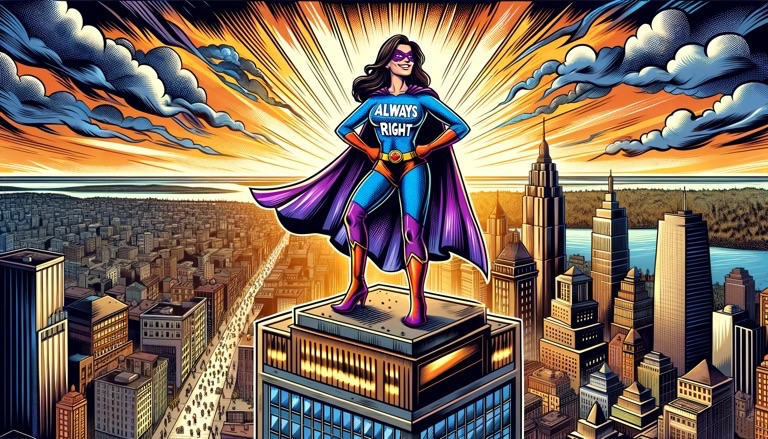
The longstanding saying, “Women are always right,” often sparks lively discussions in social dialogues. At first glance, it might appear as a cliché or a sarcastic remark, but when examined closely, this statement provides intriguing insights into decision-making dynamics, gender roles, and how perspectives are formed and appreciated.
This phrase has coloured our conversations and interactions for years. Its origin might be unclear, but its presence continues to be felt in popular culture, family anecdotes, and social discussions.
The phrase is used earnestly and jokingly in many contexts, reflecting the complex dynamics between gender and decision-making.
Each time a woman stands up for herself, she stands up for all women.”
Maya Angelou
Societal stereotypes often attach themselves to this saying. We live in a world that tends to place women in roles of emotional intelligence, empathy, and intuition – traits that might influence the perception of their ‘rightness.’
However, it’s important to consider whether this phrase genuinely recognizes these strengths or inadvertently promotes harmful stereotypes.
The concept of decision-making also adds to the complexity of this phrase. Some research indicates that women tend to be more cautious in risk-taking than men. This cautiousness might influence our understanding of a woman’s ‘rightness’ and make us perceive them as better decision-makers.
Emotional intelligence plays a pivotal role in this perspective. Studies suggest that women generally have a higher EQ than men, making them more adept at reading people and situations.
This ability could lead to more accurate judgments, fostering the idea of them being ‘always right.’
Meanwhile, long-standing societal expectations and gender roles influence how we view this saying. Women are often expected to maintain harmony in their personal and professional relationships, possibly leading them to make more considered, consensus-based decisions.
She was a wild one; always stomping on eggshells that everyone else tip-toed on.”
Kaitlin Foster
However, it’s crucial to question the overall validity of the statement that ‘women are always right.’ It’s unrealistic and unfair to believe that any group is always right.
Such an idea potentially perpetuates gender stereotypes and diminishes diverse perspectives.
Therefore, we should rethink how we understand and use this phrase. Perhaps it’s better to view it not as a literal statement but as an acknowledgement of the strengths and potential of women.
Each individual, whether man or woman, has unique strengths and weaknesses. ‘Always being right’ does not have to be a burdensome expectation but can be seen as a symbol of appreciation for women’s emotional strength and intuition.
As a society, we should strive to celebrate these strengths and potential while also understanding and appreciating the uniqueness and perspectives of each individual, regardless of gender.
Our collective role is to pursue understanding, not stereotypes. We should strive to listen to and understand each other, not just accept existing clichés. In doing this, we will better understand who we are as individuals and as a society and how we can create a more equitable and inclusive world.
 Perspexto
Leave a comment